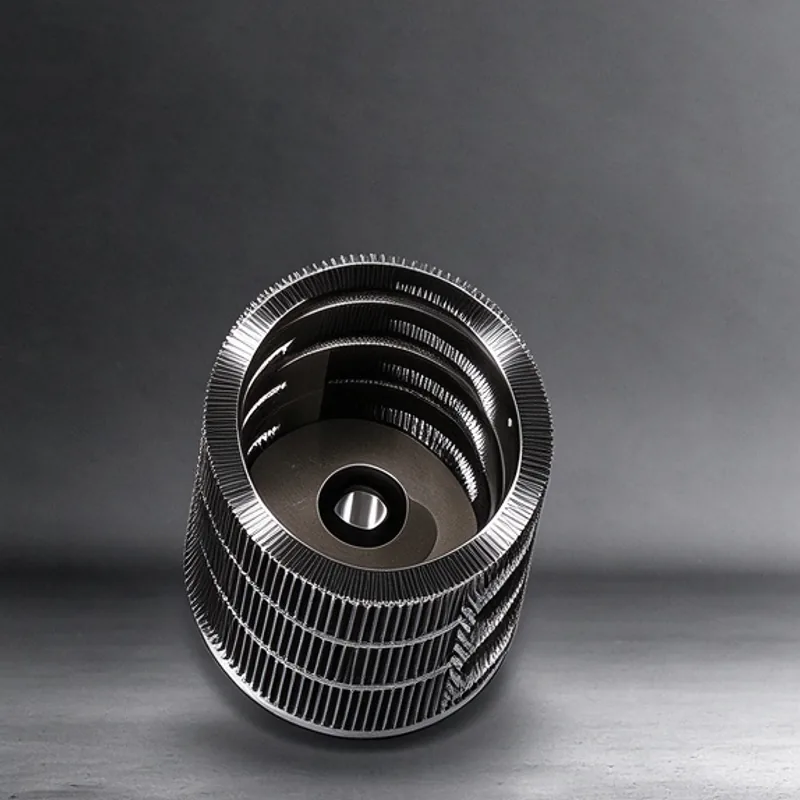
Uneven powder fineness can come from a wear part, a mechanical setting or a change in feed and airflow. Work from the most direct wear indicators toward system-level checks, and record each finding before making an adjustment.
1. Check classifier impeller wear
The classifier impeller separates finished powder by size. Damaged vanes, uneven wear or an imbalance can disturb the classification flow and produce a wider or less stable particle-size result. Inspect for vane wear, cracks, build-up and abnormal rotor movement. Follow the equipment supplier's procedure and isolate the machine before inspection.
2. Confirm roller gap and contact condition
Uneven roller clearance can change how consistently pressure is applied to the material bed. Check for abnormal movement, loose locating parts and wear at the roller assembly. Confirm clearances with the correct mechanical procedure rather than adjusting the system based only on the finished powder sample.
3. Inspect grinding ring deformation
Check the grinding ring for localized wear, deformation, cracks and an uneven working profile. A changed ring contour can affect roller contact and material-bed pressure. A severe defect should be assessed before continued operation, even when the powder test remains within specification.
Feed size, feed rate, moisture, airflow and operating settings can all affect fineness. If wear parts appear acceptable, compare the current process record with the last stable production period before changing more than one variable.
A practical troubleshooting sequence
- Take a representative powder sample and record the current result.
- Inspect the classifier impeller, grinding rollers and grinding ring.
- Confirm roller clearance, locating condition and rotor movement.
- Review feed conditions, airflow and recent operating adjustments.
- Replace or correct confirmed defects, then verify production stability.
When to request technical support
Send the mill model, part names, wear photos, powder sample result, recent maintenance record and operating symptoms to sales@hcymill.com. This information makes it easier to identify whether the issue is related to the impeller, roller assembly, grinding ring or process conditions.