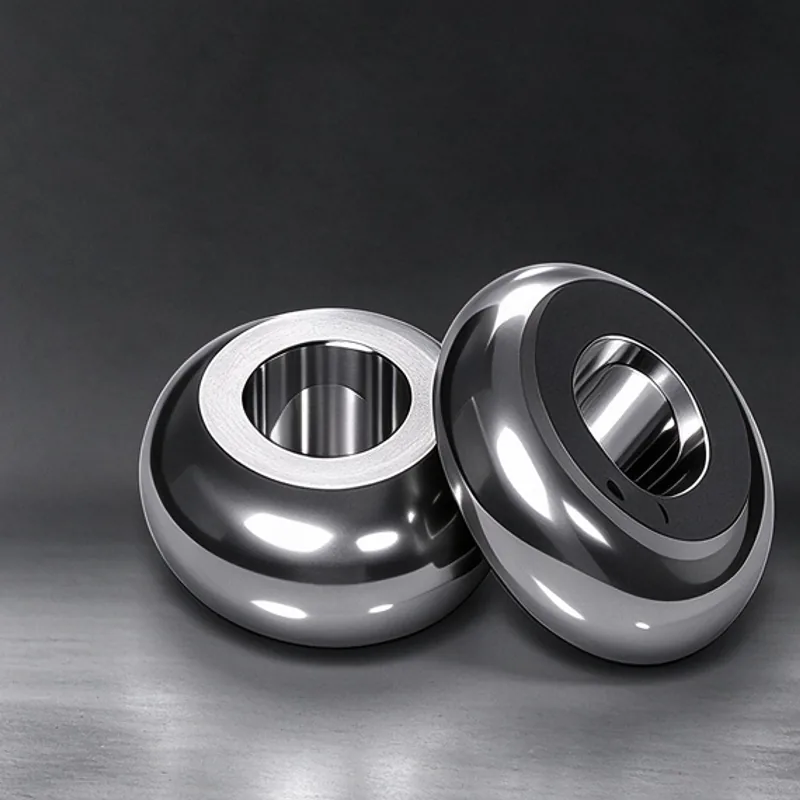
Grinding roller wear develops gradually, so one visual check is rarely enough to confirm replacement. Use surface condition, mechanical checks and operating symptoms together before planning a shutdown.
1. Inspect the working surface
Clean the roller surface and examine the full working face under good light. Look for deep scoring, heat marks, polished bands, pitting and uneven contact patterns. A light, even wear pattern is normal. Localized deep wear or a stepped profile can disturb the material bed and make output less stable.
2. Check cracks and edge condition
Inspect the roller edges, end faces and any welded or keyed areas for visible cracks. Pay particular attention to impact marks, chipping and crack lines that begin at an edge. A confirmed crack should be assessed before the mill returns to service; do not rely on output readings alone to decide whether the part is safe to continue using.
3. Review clearance and assembly condition
Check the roller assembly for abnormal movement, loose locating components and wear at the shaft pin or mounting interface. The roller may still look acceptable while poor clearance affects pressure, vibration and particle-size consistency. Follow the OEM inspection procedure and isolate the machine before checking clearances.
Use falling capacity, rising vibration, unstable fineness or uneven current draw as supporting evidence. These symptoms can have several causes, so confirm wear mechanically before ordering a replacement.
When to plan a replacement
- The working surface has obvious deep wear or an uneven profile.
- A crack, chipping or other structural concern has been confirmed.
- Clearance or locating-condition checks show unacceptable movement.
- Production symptoms continue after feed, airflow and operating settings have been checked.
Information for a replacement quotation
Prepare the mill model, roller quantity, material requirement and shipping destination. Clear photos of the worn surface and edge, a part drawing or key dimensions will help confirm the required configuration before quotation.